The New Normal

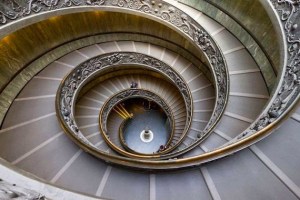
Spiral Staircase Queens House UK www bamorama com

Ah, it’s nice to return to the blog-o-sphere…

I never pegged myself as one to share extremely personal things via my blog; however, I feel sharing this experience is beneficial on multiple levels.  Firstly, I want to explain my hiatus from this commitment.  Secondly, I hope that sharing the experience will allow others to catch a glimpse into my reality and, perhaps, see our commonality.  Lastly, I believe that appropriate sharing is cathartic.

When I first set out to create this blog, I did so with my life partner, my best friend, my husband.  Some of you who have been following will remember our collaborations and his poetry–which are still hosted on this site.  Despite us both being committed to our spiritual paths, our relationship path has diverged and we are not continuing in the direction of a married couple.  We are still committed to our children and to the being the best co-parents and friends we can be.

Sharing what “happened” isn’t necessary. In fact, according to Swami Rama, “The nature of Reality is a game of hide and seek, which is really the only game there is—now you see it and now you don’t.” Furthermore, the Yoga Sutras explain: “Although the same objects [or situations] may be perceived by different minds, they are perceived in different ways, because those minds manifested differently.

So in actuality, what “happened” is based on whose perspective you garner.  In fact, the word perspective is powerful in and of itself…  According to Google, “[in] late Middle English (in the sense ‘optics’): from medieval Latin perspectiva (ars ) ‘science of optics,’ from perspect- ‘looked at closely,’ from the verb perspicere, from per- ‘through’ + specere ‘to look.’”  What calls me is not the fact that it means to look, it’s the fact that it denotes looking through.

So what is it that we are looking through?

It is the veiling Power of the Universe, Maya.  “Maya means appearance, as if something appears to be one way, but is really another… some view maya as meaning that nothing is real, and turn this into a cold-hearted intellectual practice, others view the illusion of maya as being shakti, the creative force of the universe. In this way, the maya of the koshas is experienced both as unreal and, at the same time, as the beautiful manifestations of the universal oneness” (Swami J).

The reversal of this process is the purpose of meditation in traditional Yoga. As Georg Feuerstein has explained, it is implosion.   A receding (for lack of a better word), through all the “layers” until there is an experience of “The Witness?“.

How does this tie in with Chad and I?  Well, I believe the philosophy and the practices I have been sharing have helped me to be more at peace with what is happening.  Firstly, as I have mentioned, I appreciate perspective in a way that I have never before.  I feel more empathetic towards someone who I may have considered to be an adversary in the past.  Secondly, they have given me more self-regulation.  All of the time watching my thoughts, emotions, and behaviors have helped me to be less reactive.  I am certainly not professing mastery; but, I feel less volatile.  Additionally, I attribute a general feeling of optimism because I know that what I am is not defined by my life situation–there is a constant which is unaffected and I have access to the peace of this space.

I was recently presented with the metaphor of grief being like a spiral staircase–as opposed to being like a ladder with rung-like stages.  We continually move through stages, which circle back around; but, on the next pass we’ve moved higher.  This is also a metaphor for sadhana (the spiritual path); we keep moving upwards–even if it seems we’re going around in circles.

Make sure to click the links– there is a plethora of information there.

Om Shanti Namaste

All Yogic Approaches are Initiatory

Tight-rope-Getty

Part 10 of “How Do You Qualify Yoga?

…I return to a more controversial qualification presented by Georg Feuerstein, in his perennial work, “The Lost Teachings of Yoga“.

Truly the name of this article can also be tilted “Do you need a Guru?”  According to my teacher, Swami Jnaneshvara Bharati, “[A] Guru is not considered to be any person, though the force of guru may operate through a person. Teachers may be respected, but are not objects of worship. “Gu” means “darkness” and “ru” means “light.” Guru is the light that dispels the darkness of ignorance.”

However, even my teacher has a Guru.

Georg is adamant, in the aforementioned work–and many others–self-taught, and even incorrect teachings have benefit, the subtle nuances of Yoga tradition are missed without a Guru to elucidate them.

How do I feel about this?  My answer probably will be cryptic–I avoid offering advice.

I know, the old adage, “when the student is ready, the teacher will come”, sounds patronizing–especially, to someone who considers himself  to be an earnest seeker.  The challenge is, especially if you listen to Georg’s audiobook, are we earnest seekers?

The Path, as described by Swami Rama in, The Architect and the Path, ” …Is narrower than the needle’s eye and as sharp as a razor’s edge.”  Furthermore, he explains, a half-hearted seeker will find that their efforts may not bear fruit.  He is assertive in his conclusion, “If your dearest one stands in the way of Self-realization, tread over him, forsake him, go beyond. If your beloved stands in the way of Self-realization, cast her aside. Your trusted friend is Truth and Truth alone.”  These strong words are the rationale behind the celibate, renunciate lifestyle of the Swami.

So, before instead of answering the question, “do you need a Guru?”  I offer, “are you a sincere seeker?”

A wise friend of mine said, “do you have a spiritual path or a hobby?”

I have vacillated on my committment; but, I am striving for complete adherence and surrender.  This adherence is not coming from the fear of punishment, or the hope of reward, from an external source.  It is intrinsic.  The deeper I go, the more I realize that I am looking for something inside of me.  The closer I get to it, the more I understand the need to associate with those who have tread this path.

My teacher is treading this path.  I listen to his advice because I feel the truth resonating in it; not, because I am following blindly.  I see the practices working in my life; but, only, when I am committed to them.

The Intention to Return Back to Life

COPYRIGHT Jeffrey Friedl

I have been pretty busy the last two weeks; I went to the Ashram for Guru Purnima (which is a little foreshadowing about my next post is the series, “How Do You Qualify Yoga“).  Then, as I had been posting for the last few months. Ma Tri came to visit and it was sublime.  The following post is the original I submitted to United Intentions. It will probably be edited in their version; but, it’s my first venture into being a guest blogger!

Descartes famously said, “I think therefore I am.”  In this statement he is proposing that we are a collection of thoughts which coalesces into the human entity.  Well, this is in stark contrast to several spiritual traditions, such as: Buddhism, New Thought, and the Himalayan Tradition (a convergence of three North Indian philosophies).  These traditions believe there is one source, one power in the Universe, however, it is called by many names. For simplicity sake, in this article I will refer to it as the Center of Consciousness.

According to the aforementioned, and many other, traditions, at our truest level we are one and the same with the Center of Consciousness. However, we take on a layers of false identities.  Consider a newly born baby, they do not know their name, sex, or race.  All of these are identities which, over time, are bestowed on them.  

The term “false identity” should not be considered a negative one.  Without taking on some of these rolls we wouldn’t be able to work, have relationships, or procreate.  The challenge is to see beyond what feels so real to us.  The way that we set down the identifications, is through practices which take us inside: meditation, contemplation, gratitude, and intentions work to bring us through our roles towards the Center of Consciousness.

In the Himalayan Tradition, the main identities are considered to be bodies, or sheaths, which, like a lampshade veil the truth that at the Center we are indescribable pure potentiality.  This tradition also views the mind as an instrument through which the Center of Consciousness experiences the world.  When the mind is polished through the aforementioned practices, we see clearly who we are and the world around us.  In one Buddhist tradition this is called Vipassana, clear seeing.  We can see that negative thought patterns, prejudices, fear and hatred are a result of the clouded and dusty lens.  

Meditation is the way we train our mind to not be swayed by its natural fluctuations. Contemplation is the practice of holding higher vibrational thoughts which point us, like a compass, towards the Center.  Gratitude practices, like contemplation, remind us to focus on what is working in our lives.  The more gratitude we offer the more we realize we are blessed and often have more resources available then we realize. Gratitude increases generosity.  Lastly, intentions, which are synonymous with affirmative prayer, are how we point our crystalline laser mind on the whatever goal we want to accomplish.

When we declare an intention and use our adjunctive practices to keep our mind translucent, we are saying to the Universe that this is what we truly want our lives to look like.  But, the “Universe” is not some force outside of us.  As mentioned, we are one and the same with the Center.  If we truly want something to manifest in our lives, intentions just remind us that in the world of apparent duality, we are who we are seeking at the core.

Intention setting is not to be mistaken with manipulation; as stated adjunctive practice provide clarity.  If we are “tuned in” our intentions will be set for the greatest good, not for mere selfish gain.  Furthermore, since there is only one Center all of ours are one and the same.  When we set intentions that are positive, we raise the vibration of the planet as a whole.  Setting intentions is a spiritual practice; it is an opportunity to inherit your birthright which is whatever you intend it to be!

All Yogic approaches account for surprise and/or grace.

Part 9 of “How do you Qualify Yoga?

About a year ago, I was facilitating a workshop and met someone who is now a dear friend.  Our connection was instant; he had been raised a devout Hindu and was very complementary about my ability to simplify teachings he had previously learned.  We culminated our discussion with the idea that, assuming you subscribe to belief in Saṃsāra, how it took everything we had done up to that moment to even be in that workshop–to even be discussing teachings which were, at one time, only available to the chosen few.

According to Swami Rama, “…There is also the activity of grace. Grace is the impulse or the impetus of the energy to dispel darkness. There is the grace of the scriptures, from the wisdom that has passed down from others. There is the grace of the teacher, who imparts that wisdom and helps bring it to life in the student. There is the grace of God, or pure consciousness, that is alive and ever present in everyone’s life. Integral to these three graces is the grace of oneself, having the will to undertake a purposeful journey in life, to do the spiritual work of life, and to prepare oneself.”

What is the source of the impulse?

According to the mahavakyas:

  1. Brahma satyam jagan mithya–Brahman is real; the world is unreal
  2. Ekamevadvitiyambrahma–Brahman is one, without a second
  3. Prajnanambrahman–Brahman is the supreme knowledge
  4. Tat tvam asi–That is what you are
  5. Ayamatmabrahma–Atman and brahman are the same
  6. Aham brahmasmi–I am brahman
  7. Sarvam khalvidam brahma–All of this is brahman

If Brahman–which is an arbitrary word for the Center of Consciousness, the nameless apex, or whatever you wish to call it–and we are one and the same, the source of the impulse is from within.  We heard it said before, “You are who you are seeking.”  Ironically, the picture above says “to serve another”–there is no other.  There is only one.

There is no need to anthropomorphize the Center, I am not suggesting “someone” is pulling strings.  But, to paraphrase Ma Tri, when you done all the preparatory work, when you have gone deep enough in your meditation, eventually it is a surrender and grace that carries you the final distance.

Hence, meditation, affirmative prayer, contemplation, and gratitude–try to do some every day.

The closer we come to Enlightenment the more ordinary we become

Part 8 of “How do You Qualify Yoga?”

Toward the One,
the Perfection of Love, Harmony, and Beauty,
the Only Being,
United with all the Illuminated Souls,
Who form the Embodiment of the Master,
the Spirit of Guidance.

I find such comfort in this prayer from the Sufi master, Hazrat Pir-o-Murshid Inayat Khan.  Especially when I contemplate the line, “all the Illuminated Souls who form the embodiment of the Master”.  Pause to savor that concept.  There is not one Master, there is not one path.  When the Buddha was asked, “who are you”?  He replied, “I am awake”.

Self-realization is an experience shared by numerous individuals from numerous traditions.  One can argue that the Buddha, the Christ, and Rumi were all describing the same level of consciousness with different words.  To believe that the omnipotent Ultimate Reality is confined to one tradition belittles it.

One hallmark on enlightened Masters is simplicity.  Not merely renunciation; because like a dry drunk, mere physical renunciation without renouncing internally is playing a role.  Internal renunciation is the letting go of the attachment to the outcome; yet continuing to strive for ultimate Reality, as described in my previous post.

All illuminated Masters incline towards simplicity.  Furthermore, the closer they are the less they are drawn to the fleeting transient world.  They taste what is “real” and tasting leads to savoring.  What could be more satisfying; to know the Ultimate Reality or to go on with the mundane temporary–even if it is stimulating to the senses.  Everything “out here” is subject to change.  The only constant is that core, “the perfection of love, harmony, and beauty”.

All Yogic approaches require the implementation of Discipline and Detachment.

Part 7 of “How Do You Qualify Yoga?

People think that sadhana–the yogic path–means the day-to-day process.  In a way it does, it is what practices you do (meditation, breath work, etc).  But, abhyasa is the moment to moment committment to this way of being and living.  It’s the cultivation, not obsession, of remembering your committment to reach Yoga.  But, all of the work you do has to be done with surrender–if you expect an exact outcome you are living in the world of control.  Control is an illusion.  There are many factors affecting us at any given time; our karma is coiled and spiraled in ways we cannot imagine.  So we do the work, we commit to the path, and we let go.  We make mistakes and we try again.  Life throws curve balls and we still meditate, contemplate, pray, and offer gratitude.  We are not bargaining with the Center of Consciousness– we are trying to connect to it.  Although, the irony is, we are never away from it.  Let the trials help you remember that every moment is Holy and Divine.

From Swami Jnaneshvara Bharati

Feeling Brave

Fearless

Today I was honest; the response I garnered stung.  But, I am grateful because I am free.  The only moment is now; I’d rather have a life without regret.

The Silence

enjoy_the_silence_by_archnophobia

From the Gross to the Subtle is proud to present our third guest blogger: the esteemed Cecelia Smith.  Please contact us if you would like to share lesson, personal experiences, meditations, and poetry from dharmic traditions and mindfulness.  Thank you for blessing us Cecelia.

THE SILENCE

Silence is of inestimable value in creating the place of change we are destined to inhabit. As our silence grows, so does the attributes of the One Being into whom we are transforming ourselves. Most of us are not yet capable of being in the Silence for extended periods of time. That is as it should be at this point in our development. Although, we may meditate for long periods of time, our moments of true Silence are very brief. Every second of linear time spent in true Silence is vast in the change it brings and the momentum it builds in our ongoing expansion. Each second of true Silence adds to our store of Silence and makes it easier for us to achieve that ultimate Silence in which we know ourselves as One Being.

That point, that second of transforming Silence is very close, and gets closer with every brush we make with the Silence. We feel it as a tremor, an awesomeness surrounding everything we do. We become excited in our anticipation of the revelations of ourselves, the One Being, Humanity. This excitement shatters our individual Silence, but in no way touches or disturbs the collective Silence we augmented by our entrance of the Silence. Second by second it grows. Second, by second, we are drawn closer to our objective; second by silent second we are a little more awake. The split second which transforms separate ego based individuals into the Great Being of Humanity is so very close. It is said in sacred writings that “no one knows the minute, or the hour when the Son of Man comes.” That is the truth.

We are building the habitation for the Son of Man on a second by silent second basis. The excitement is almost unbearable. The suspense so great, that some of us rush ahead. The Son is not ahead. The Son is not behind. The Son (translated SUN) is within the silent seconds we spend in the Silence. The magnificence of the raising Sun draws strength and substance within the Silence, getting bolder with every second spent within it. This Silence is an act of grace. We pray, we meditate, we sing, we dance, we expect and we love, all doing all building, all calling for the Silence to overtake us. Then it does and we remember. The truth of who we are dawns within our consciousness. We are astonished by our beauty and grandeur. Then we retreat from the Silence enter the world of doing again, leaving behind a Silence grown larger by our silent presence. The birthing of the Sun of man draws ever more close.

Enter The Silence Now and Become the Sun.

” I have written almost all my life. I write because I must. Words pile up inside my head and the only outlet for me to have is to write. I choose to share some of these writings in my blog ‘motivated in spirit” to inspire first myself and then others. It is my hope and prayer that you find these blogged words inspirational. Thank you… In the deepest love, Cecelia”

Cecelia’s home blog is:

Motivated By Spirit

A motivational blog to remind ourselves of our grandeur and Divinity.

http://motivatedinspirit.blogspot.com/


Yoga is a Continuum of Theory and Practice

10268564_10202737097364294_1479620227992725011_n

Part 6 of “How do you Qualify Yoga?”; this should have been Part 5. I accidentally skipped a section… Oops

We will, ultimately, put this whole series on its own page in the menu bar. In addition to guest contributors, we’ll be moving older post into pages that can more easily be accessed for future reading.

This is probably my favorite post in this series. It reminds me of a quote I learned almost twenty years ago, when I was a member of Siddha Yoga, “Muktananda, put down the book and meditate”.

We live in an amazing time where information is accessible instantaneously. If you’re like me, attachments are a real issue, a hindrance as the Buddhist described them, even attachment to more “knowledge”. I can easily find myself listening to an audiobook during my commute, taking numerous workshops, and trying out new techniques.

It’s not that this is wrong–it’s simply that it is, according to Ma Tri, “mere knowledge”.  Furthermore, the quest for acquisition is insatiable–whether it is material or intellectual.

According to the Yoga Sutra 1.7, there are three ways of gathering correct knowledge, “…there are three ways of gaining correct knowledge (pramana): 1) perception, 2) inference, and 3) testimony or verbal communication from others who have knowledge”.

Swami J goes further to explain, “…you should not believe what you hear, but should seek direct experience… The second part is that of reasoning, whereby you want that experience to be understood in the light of your own inference or reasoning. The third part is that you seek the validation through some respected authority or testimony [scripture]… When you can get these three to converge, meaning that experience, reasoning, and authoritative validation all agree with one another, then you know, and you know that you know…”

Swami J draws a metaphor of Yoga Meditation and mastery of an instrument.  A virtuoso knows the technique and theory; but, the also play from the heart.

My teacher will often appear cryptic when I ask a question, recently, when I was perplexed he said, “You’ll find it in the light of Atman”.  In other words, I needed to go inside–I am the one I am seeking after all.

Swami Rama described us scientists and encouraged us to “experiment” on ourselves.

The Buddha famously explained, his path was working for him.  But, if it doesn’t work for you, don’t do it.

But, how will you know if you don’t go inside–often?

Ripples and Tsunamis

11059693_499535620202889_4590136049900749382_n
I saw the quote above on PDAN Teen.  The I rememebred, Ma Tri once described thoughts as ripples on the lake of the mind. She went on further to described emotions as Tsunamis. Then she expounded, “Imagine you could harness the energy of a Tsunami. Imagine if you directed that to whatever your life’s goal is”.  It left me speechless. I long to crave self-realization with the same fervor as any other Tsunami which has roared through me. Until then, I’ll ride the waves and learn to surf.