
Direct experience is the only “Real” experience.
Category Archives: Himalayan Tradition
The Zen of Anger

It would be ludicrous to think that as a practitioner of yoga meditation I don’t get angry. In fact, my inclination toward getting annoyed is one of the reasons I am so dutiful with my practice. If we follow the DISC personality typing, I am an “I”–which means Influence–but, it can also mean Impulsive! However, the same energy that is the source of my strengths is also the source of my lesser strengths.
This morning I got angry with my son–the people that we are closest to can be the source of our greatest joy. Paradoxically, they can be the catalyst of our greatest frustration! I have a lot invested in my son–he is after all, my son. With an investment comes an expectation. When the investment does not yield a return it is a disappointment. This investment is an attraction and the disappointment is an aversion.
According to the Yoga Sutras, both attraction (raga) and aversion (dvesha) are two faces of the same coin–attachment. Both of these stem from a lack of knowledge of our true nature (avidya)–our true nature is perennial, not ephemeral. However, the nature of the physical world is transient. We cling to the things and experiences of the physical world that we love. We push away the things and experiences that we abhor. But, both the pushing and pulling cause us suffering (dukha or dukkha).
I am attracted to my son doing what I believe is best for me, he does something other than that, my attraction to my expectation is not met, I experience disappointment, my disappointment is a form of suffering. To the unmastered mind, all worldly experiences yield suffering because they are impermanent. However, this does not have to be the case.
When we are rooted in our true nature from earnest abhyasa and vairagya (practice and non-attachment) then we are aware of the fleeting nature of our experiences and we can be released from the suffering of attraction and aversion. It does not mean we are apathetic or ambivalent–I am still going to parent my child–with the hope that he leads a skillful and happy life. But, I am working on not expecting him to do what I want. We still have rules. If he breaks them, he is punished. But, now it’s not a big emotional tirade–because I didn’t get what I want.
Today I got angry, I felt the blood pump and my temperature rise. But, I was very aware that this was a bodily experience and not who I am at the core; moreover, not an emotion I have to act on. I didn’t resist the anger–that is aversion–I just let it come. I went for a drive and returned as the person I want to be.
Consistency in Meditation Practice

I was listening to an audiobook that is a staple in my library now, “Practicing Mindfulness: An Introduction to Meditation” by Professor Mark W. Muesse Ph.D. The lecturer eloquently describes our exhibitionist media’s stereotypical image of a meditator: young, scantily dressed woman, on a beach or in a lush garden. He artfully explains this image makes meditation seem relaxing, easy, and fun. However, Muesse goes further to explain how polarizing this is–if you can’t sit criss-cross applesauce, if you’re not young and lithe, and if you’re not a sexy woman you may feel excluded from the club.
I’ve got news for you: meditation is not necessarily easy (in fact, at times it may be difficult). Furthermore, with an untrained body and mind there will be discomfort. But, like an athlete systematically trains for a marathon by consistently increasing their running on a weekly basis, a consistent practice will unfold in the ability to sit, reasonably comfortably, in meditation.
The Himalayan Tradition prescribes sitting in meditation four times a day! Yes, that may be daunting. Furthermore it may not be your reality. I have to maintain flexibility in my practice schedule. But, I sit every day!
The Yoga Sutras explain, if one wants Realization (if that is what you want), this requires committment. Realization is the greatest undertaking of a Human Life– it is not to be taken lightly. If you want to lower your blood pressure and zone out, then you should meditate sporadically.
All the Masters prescribe a relationship with The Silence, from Jesus to The Buddha. So I guess the real question, before we determine why so many people don’t meditate regularly–is, what do you really want?
Classically, in Raja-Yoga (the path described in the Yoga Sutras), one does not start with meditation. One begins with getting their house in order.
Perhaps you attracted to the idea of meditation, as stated it is recommended by The Best. But, you don’t know what you want for your life. Perhaps, you don’t have a goal. The aforementioned runner does not only hit the road to prepare for a marathon (meditation), they also use weights, they stretch, and they modify their nutrition. The Himalayan Tradition affords adjunctive practices to prepare and enhance meditation. One such practice is internal dialogue (atma vichara).
Internal dialogue is just that: having a two-way conversation with the mind. Don’t let that seem schizy to you– we do it all the time. Sometimes it is more that a two-way conversation– Muesse describes it as a committee meeting! Internal dialogue is a practice which allows you get to know your own mind, to befriend it, to learn your true deepest desires, and to have a goal for your life.
If you’re already meditating, but not using atma vichara consider adding it to bolster your practice. If you’re meditating inconsistently, understand your level of effort will yield fruit accordingly. If you haven’t begun a meditation practice, and you feel an aversion or hesitation, start with atma vichara (internal dialogue) to learn why.
Then meditate, meditate, meditate. As my beloved Swami J says, “May your meditation today bring you peace, happiness and bliss…“.
P.S. USE THE LINKS IN THE ARTICLE TO DEEPEN YOUR UNDERSTANDING!!! LOOK AT THE GUIDED PRACTICES CATEGORY FOR MORE ASSISTANCE.
I am NOT a Yoga Teacher…
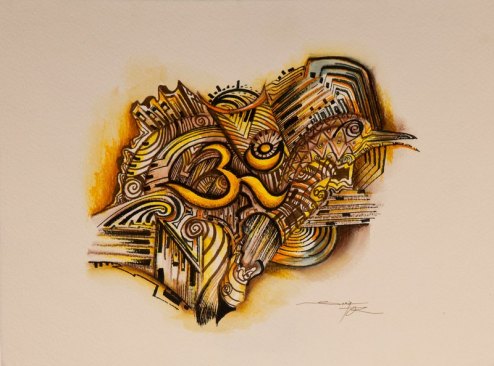
I am not a Yoga Teacher… It sounds so ominous, as if I am rejecting my “career” path of the past 20 years! But, it’s quite the opposite; I am affirming my sadhana (spiritual path)–and that’s what matters.
All speech has an intention underneath it– allowing the propagation of a misnomer, for the sake of simplification, is egregious to a seeker.
I am not a Yoga Teacher–really there is no such thing. Among many definitions: Yoga is the transcendental state of consciousness; Yoga is the union of the microcosm and the macrocosm– how can one embodied being teach that???
Yes, there are Realized Masters who benevolently impart their wisdom. They have Realized their True Nature and they are guides– but, the aspirant must still walk the path.
In fact, the Yoga Sutras explain that there are three ways to obtain knowledge. Intuition, Experience, and a Qualified Teacher. But, the highest knowledge, truth, is the convergence of all three.
The aforementioned Masters are desireless– but, they share these teachings with the understanding that we are all one and it is the right and privilege of all to Self-Realize.
There is no “Teacher’s Training” that can offer this– because it requires direct experience. That is the part that seems to be ignored by the conventional.
At this junction I am a Sadhaka, not a Yogi (they have attained Yoga), I hope to Realize this state. But, until then I am a coach, a guide, and an aspirant.
Yoga is for the sake of Yoga
Greetings Dear Ones,
To my readers who are aspirants, this is a lovely quote from Swami J:
“In the systematic process of meditation, you gradually move your attention inward, through all the levels of your being, gaining mastery along the way. Eventually you come to rest in your true nature, which is beyond all of those levels. This action and the realization of this center of consciousness, is the meaning of Yoga”.
The goal of Yoga is Yoga.
The Pinnacle of the Three Streams
Sometimes you learn a technique, teaching, or explanation that cannot be trumped. I was on Facebook reading a fellow teachers notes and they reminded me of Swami Jnaneshvara’s succinct cumulative definition of Yoga. Since it is not something that can be intellectualized, this definition is comprised of a few ways to gain a mote of “comprehension” of something that is purely experiential. I have added links to every one of the Sanskrit terms. Learning these relationships is a great asset in the development of a Yoga Meditation practice. Thank you, Swami J, for your compilation. (The full text from which this definition is drawn can be found here)
Traditionally, Yoga (Sanskrit: union) has referred to the realization through direct experience of the preexisting union between the microcosm of individuality and the macrocosm of universality, Atman and Brahman, Jivatman and Paramatman, and Shiva and Shakti, or the realization of Purusha standing alone as separate from Prakriti.
Yoga is the union of the
– Microcosm of individuality and the
– Macrocosm of universality
Yoga is the union of
– Prana vayu (the upward flowing prana) and
– Apana vayu (the downward flowing prana)
Yoga is the union of
– Atman (Center of consciousness, Self; Vedanta) and
– Brahman (Absolute reality; Vedanta)
Yoga is the union of
– Jivatman (Soul as consciousness plus traits; Vedanta) and
– Paramatman: (Self/soul as only consciousness; Vedanta)
Yoga is the union of
– Shiva (Static, latent, unchanging, masculine; Tantra) and
– Shakti (Active, manifesting, changing, feminine; Tantra)
Yoga is the dis-union of
– Purusha (Untainted consciousness; Sankyha-Yoga) and
– Prakriti (Primordial, unmanifest matter; Sankyha-Yoga)
 From the Gross to the Subtle