
Oh I like you,
You’ve tickled me Like a feather
You’re an out of the blue,
electrifying lightning strike,
From a crystal sky,
In this gorgeous weather!

Oh I like you,
You’ve tickled me Like a feather
You’re an out of the blue,
electrifying lightning strike,
From a crystal sky,
In this gorgeous weather!
these games of seperation
are enemies of the majesty
feeding voraciously,
consuming ferociously
growing exponentially
now more than ever
we need you tremendously
to fight the good fight couragesly
help us end this tragedy
with your philantrophy
recognition of non duality
and inherent spirituality
whilst loving universally
in this emerging reality
Death has not been as proximal to me as it has been to others. I have never lived in a war zone, I did not have friends succumb to violence in youth, my grandparents, parents, sibling, and spouse are either alive or have transitioned at a ripe old age. However, this year two friends, both in their middle thirties and who I had been very close to several years ago, passed away. Whenever death makes a showy appearance it causes me to reflect on impermanace and transition.
My husband, one of my greatest teachers, refers to death as the great equalizer–it is the one experience we are all guaranteed to partake in. However, it is also the one we have no concrete information on… we will only know when we arrive.
Here arises the question, how do we best prepare for this unavoidable journey? One place is with an understanding of the concept of avidya— the primal ignorance of identification with what is not who we are.

The Himalayan Tradition holds to the belief that, to the uniformed individual, what we appear to be and what we truly are is often misunderstood. What we are, according to this nondual tradition, is eternal, perfect, pure consciousness. What we appear to be is temporary, greatly flawed, and governed by the laws of the physical world–avidya is this misidentification.
How do we begin to dissolve the grip of avidya, the first step is knowing of it’s existence. The second is through our meditation and adjunct practices.
In meditation, we, initially, set down the false identities that are closer to the surface: teacher, student, asana instructor. Gradually progressing to the deeper ones: wife, mother, woman. Eventually to the deepest ones: human, fearful, temporary.
Many traditions discuss practicing for death– I particularly resonate with the sibling tradtion of Tibetan Buddhism and their “Death Meditations“. The Himalayan Tradition explains we must be a scientist “an interior researcher“– we musn’t subscribe to a belief because of blind faith– we must develop experiential knowledge. We can lightly knock on the entrance to deaths door by moving into the causal plane of consciousness with Yoga Nidra in savasana (the one asana that no one seems to translate into English “corpse pose”); or, we can move into superconsciousness with meditation and experience the Silence of the Center. Although these are temproary states, little by little one develops a knowing that these states are closer to our intrinsic one.
I have no intention of belittling the grief that we experince with the “passing” of a loved one through the veil. However, as this transition is inevitable for all of us it would behoove us to be as comfortable and unafraid of this journey as possible.

It tried to leave me,
but can the liver leave its heart behind?
it looked in the mirror,
used its two eyes to see me,
what looked back was a good man,
with a smile so kind
Made peace with it all
and am so happy to be me
embracing the lovely
That is my being combined.
Writing the story thoughtfully
of man and god, intertwined

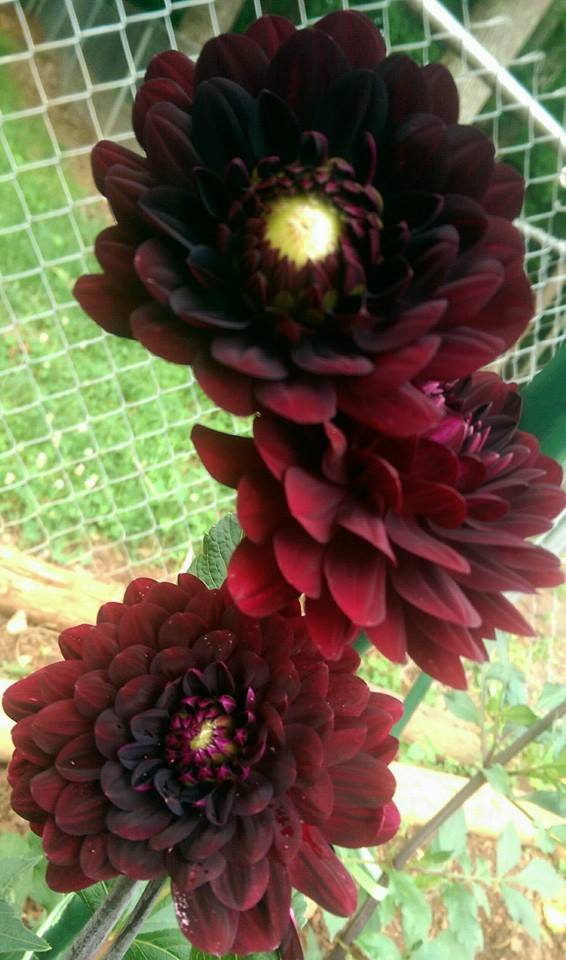
Sometimes you learn a technique, teaching, or explanation that cannot be trumped. I was on Facebook reading a fellow teachers notes and they reminded me of Swami Jnaneshvara’s succinct cumulative definition of Yoga. Since it is not something that can be intellectualized, this definition is comprised of a few ways to gain a mote of “comprehension” of something that is purely experiential. I have added links to every one of the Sanskrit terms. Learning these relationships is a great asset in the development of a Yoga Meditation practice. Thank you, Swami J, for your compilation. (The full text from which this definition is drawn can be found here)
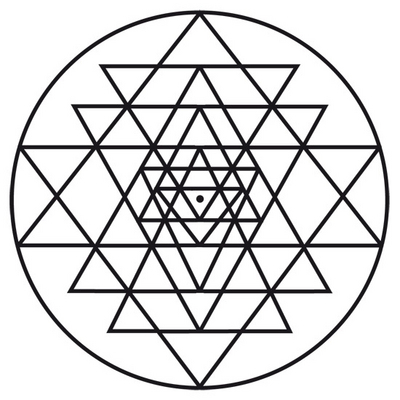
Traditionally, Yoga (Sanskrit: union) has referred to the realization through direct experience of the preexisting union between the microcosm of individuality and the macrocosm of universality, Atman and Brahman, Jivatman and Paramatman, and Shiva and Shakti, or the realization of Purusha standing alone as separate from Prakriti.
Yoga is the union of the
– Microcosm of individuality and the
– Macrocosm of universality
Yoga is the union of
– Prana vayu (the upward flowing prana) and
– Apana vayu (the downward flowing prana)
Yoga is the union of
– Atman (Center of consciousness, Self; Vedanta) and
– Brahman (Absolute reality; Vedanta)
Yoga is the union of
– Jivatman (Soul as consciousness plus traits; Vedanta) and
– Paramatman: (Self/soul as only consciousness; Vedanta)
Yoga is the union of
– Shiva (Static, latent, unchanging, masculine; Tantra) and
– Shakti (Active, manifesting, changing, feminine; Tantra)
Yoga is the dis-union of
– Purusha (Untainted consciousness; Sankyha-Yoga) and
– Prakriti (Primordial, unmanifest matter; Sankyha-Yoga)
Some use the old adage others are hampered by a blockage
still more complain of the contest’s early stoppage.
It used to be about all types of suffrage
or the top quality of your package
but thankfully that unique carnage
has given way to a growing spiritual assemblage.
The great advantage of our marriage to each other
and our growing courage
is releasing us from bondage, giving us strength as the right arm
or should I say appendage
of a collective that is our right and our secret heritage.
This is not the hopeless wreckage.
It is the total package
waiting for you and I to manage our miscarriage
and unpack our baggage.
What waits for us? Only limitless advantage
and the demise of outrage as we celebrate a brand new image,
and the obsolescence of preface as we engage in this great and complex voyage
that will lead us to love and ultimately safe passage into the new frontier of a
perfect AGE

Arrows fly as do accusations.
Spirits soar to meet expectations
Fingers no longer point
Because the archer’s aim was true.
A collective gasp is heard
And panic ensues
Hard to walk across these floors
Because they’re littered with the corpses of dinosaurs
With arrows protruding from their eyes.
Tripping the antiques that don’t share in the indigo hues
that the elevator brought down to change the faces of the bright red blues.
Was all this murder necessary just so we could recognize peace?
It seems so,
It bleeds so ,
As it continues to bring us to our knees.
One day we’ll get back on our feet,
Find a new color to anoint
Something that deciphers these words for their reader
But for now we will have to adhere to the glorious wisdom of our money, politicians, and so-called religious leaders.
The last “Simple Tip” (look under the categories menu tab) I shared was utilizing the complete relaxation technique. In the systematic style of meditation expounded in the Himalayan Tradition, complete relaxation is only the second stage–it follows a postural practice. Let’s pause for a moment– if you’re new to this blog, or yoga meditation, no worries–you don’t have to have a perfected postural (asana) practice to continue. Furthermore, if time is a constraint, simple stretches– even a nice walk– will get you “into” the body.
Now, assuming you have worked with relaxation, which is a necessity– you cannot meditate if you are anxious and distracted— you begin to move further towards your Self via the breath.
We have all heard, anecdotally, about the importance of breathing deeply. But, it’s more than just the decompression of a sigh– shallow breathing negatively impacts our physiology. It is further exacerbated by, to name a few co-factors: poor posture, obesity, and incorrect breathing techniques.
In this tradition, the breath is the more “gross” manifestation of the “subtle energy” (prana) that animates the physical body– like electricity conducted along a wire. Therefore, we must refine the breath: make it deep, smooth, even (or seemless), and silent. The key to this is diaphragmatic breathing. The following video by Swami Jnaneshvara Bharati elegantly explains the physiology of the technique.
It is important not to get frustrated if the technique feels alien at first–no one would expect us to run a marathon without training. The upper abdominal muscles have to become stronger; furthermore, the chest and the belly have to be reeducated.
After your complete relaxation–or while you are lying on the back in savasana– you can sit tall and well and begin to work with the breath. Take your time with it. Keep the facial muscles and shoulders relaxed. As I have mentioned in previous posts, less is more in the beginning. Focus, completely, on diaphragmatic breathing for a predetermined amount of time–five to seven minutes. You may find this metronome helpful to keeping a steady cadence; I set it to 60 bpm and then inhale for about 5 to 6 seconds and exhale for the same length. After a while, try to lengthen the breath cycle– but, as a beginner, keep the breath even. Then just notice the difference in your body. What sensations do you feel? You are laboratory and Yoga practitioners are scientist who explore themselves from the gross to the subtle– and beyond.
This powerful arm leads to an even stronger hand
that holds you fast as this majesty expands.
There is nothing that this embrace can’t outlast,
There is nothing we can’t withstand.
Finding peace
even in the shadow we cast.
A renewed belief
in a world we can understand.
A sigh of relief
and fellowship unsurpassed–
restores faith throughout the land.
 From the Gross to the Subtle