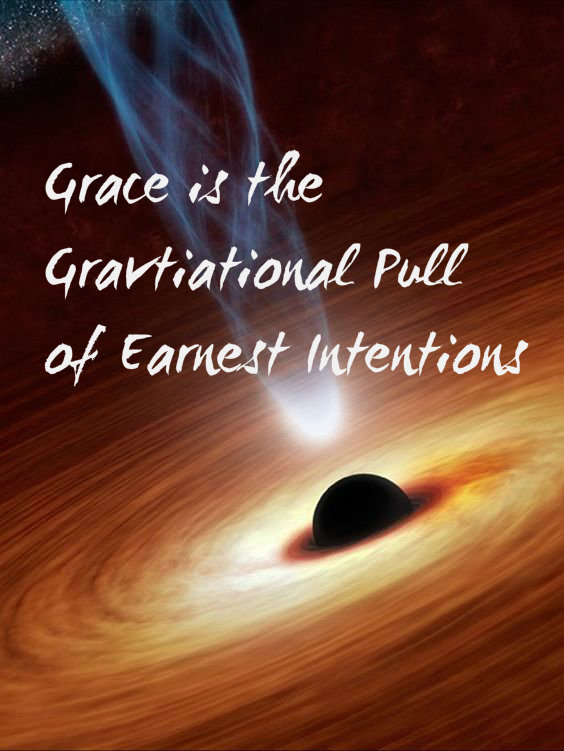
Grace and Discipline a Two-handed Embrace

This post will also be on the Abundant Earth Coop online zine: https://abundantearthcooperative.com/

It’s so good to be back…

As a spiritual leader, minister, and teacher, I am struck by how often people will quickly say they are “spiritual but not religious.” While I can understand the desire to avoid being pigeonholed by institutionalized and dogmatic traditions, I also feel there can be a wishy-washy quality to calling oneself spiritual and not having a set practice to support the spiritual claim. I have found that discipline is an essential component of most spiritual practices, but discipline can also be cold and stringent. Ironically, in my own experience, if I don’t stay consistent with my goal of a particular practice schedule, I may swing my pendulum entirely in the opposite direction and almost rebel by not doing any kind of practice. As I considered why I had hit this confusing ‘back and forth’ roadblock, I realized I needed to balance grace and discipline. 

As for grace, I think of it in two forms. The first is Grace with a big ‘G’, (aka Divine Grace) which flows from the center of consciousness to all sentient beings. It is the Grace we might perceive as a guardian angel, and it is the situations and skills present that pull us back into our highest selves. This Grace is constantly flowing; we fall into it when we surrender. The other form is grace with a little ‘g’. It is a microcosmic version of Divine Grace. It shows up as self-compassion for our shortcomings, patience with our inconsistencies, striving, slipping, and beginning again, and discipline is of utmost importance to support that grace from within. When we focus on self-grace, we can temper the edginess of discipline.

To work with discipline, it is essential to have structure. I have been experimenting with ways to create optimal time for gratitude and meditation. Since I am a morning person, I have found that my mood and awareness of the silent stillness within are maintained when I start my day with prayer, meditation, and gratitude. It could be a challenge for me to create a consistent routine since I have an atypical schedule where my morning obligations change from week to week. Rather than allow this to be a roadblock, I have become creative with my morning rituals. I do an abridged practice in the weeks that I have an earlier commitment, and in the weeks when my commitments start later, I do a more extensive practice. Regardless of my circumstances, I begin my day by attuning myself to the highest version of Source. Some days I have to shorten my practice even further, but instead of skipping my practice on those days, I give myself at least two to three minutes to remember my purpose. I also give myself grace for extenuating circumstances such as needing to adjust for children, work, and traffic. Despite these real situations, I do something every day. 

Self-grace acknowledges that I am not a monk; I’m a mother, and I live in the world. However, I don’t allow this to turn into excuses and lapse into behaviors that pull me away from awareness of the Divine. We are in the Divine; we are the Divine. The Divine is constantly pulling to help us realign and connect with that which gets covered by our everyday busyness. In the same way, Divine Grace constantly flows to us, and we can benefit from giving ourselves the same grace that the Divine is always giving us. It’s helpful to lovingly remind ourselves we are doing our best in any given moment, that we will only grow when we choose to attempt consistency in our spiritual work, and that it is ok to start over when we falter. The best results come when spirituality is not merely a hobby but when it becomes a lifestyle.

Arguing In My Head

Image result for sounds in my head

Greetings Dear One,

Have you ever been having a powerful argument, explaining your side, being absolutely right… I mean you are absolutely winning this battle… But, it was a completely one-sided conversation– the person you were arguing with wasn’t even there.

Our brains developed from ancestors who were survivors: they avoided being eaten by sabertooth tigers, they survived wars, they procreated despite unspeakable odds.  Whether you call it karma or genetics (aren’t they one and the same) we are the descendents of these amazing individuals.  

When our ancestors prevailed over their adversaries, it was beneficial for them to be able to tell their story around the campfire.  Imagine how helpful it was to explain how to increase someone’s chances of survival in a dangerous and primal world.

Our minds still like to tell a story.  Whether it about a car accident we had that we have to share on social media; or, it’s rehashing past grievances–even if only in our head.

Perhaps you’ve heard of autobiographical memory.  It sounds like an amazing super power.  Paradoxically, several scholarly articles explain this nearly perfect recall makes it more difficult for people to let go of the past.

Often, we believe if we reflect on our past we will garner a bit of information, we will make some more sense of… it–whatever “it” is.  In some cases this is true; however, for most of us rumination isn’t helpful.

As much as our mind has a habit (samskara) of time-travelling nostaligically into the past and anxiously into the future, our life is happening now.  This is the essence of mindfulness.

“I’ve lived through some terrible things in my life, some of which actually happened.”

Mark Twain

However, being mindful doesn’t mean always attending to the world out there.  It’s a flexible attention, shifting outward and inward appropriately.  This skill is garnered with meditation.

When we meditate regularly, we begin to observe our mind a bit more as if it were in front of all, the yogi’s describe this as being the witness.  Then we can see our mind has a habit of retelling stories when certain triggers are switched.  Next thing we know, we check out of our life and are arguing with those who have wronged us.

I am not saying we should allow ourselves to be victimized.  However, many of us (myself included) can find that we’re pining for a lost love, wishing a dead perpetrator would come to justice, or hating the first boss who fired us twenty year ago.

Life is happening NOW.  Now is all we have.

“You can be right or you can be happy.”

Gerald G. Jampolsky

Now, this is only one article–it’s not the answer for perpetual happiness.  Living in the “now” can be an excuse to procrastinate and avoid our obligations.  Mindfulness has to be in conjunction with our Values–it is a servant to a Higher purpose.

–That’ll be the next article.

Please, click on the links.

It’s been a while.

Life Happens,

Namaste

My Hungry Little Ghost

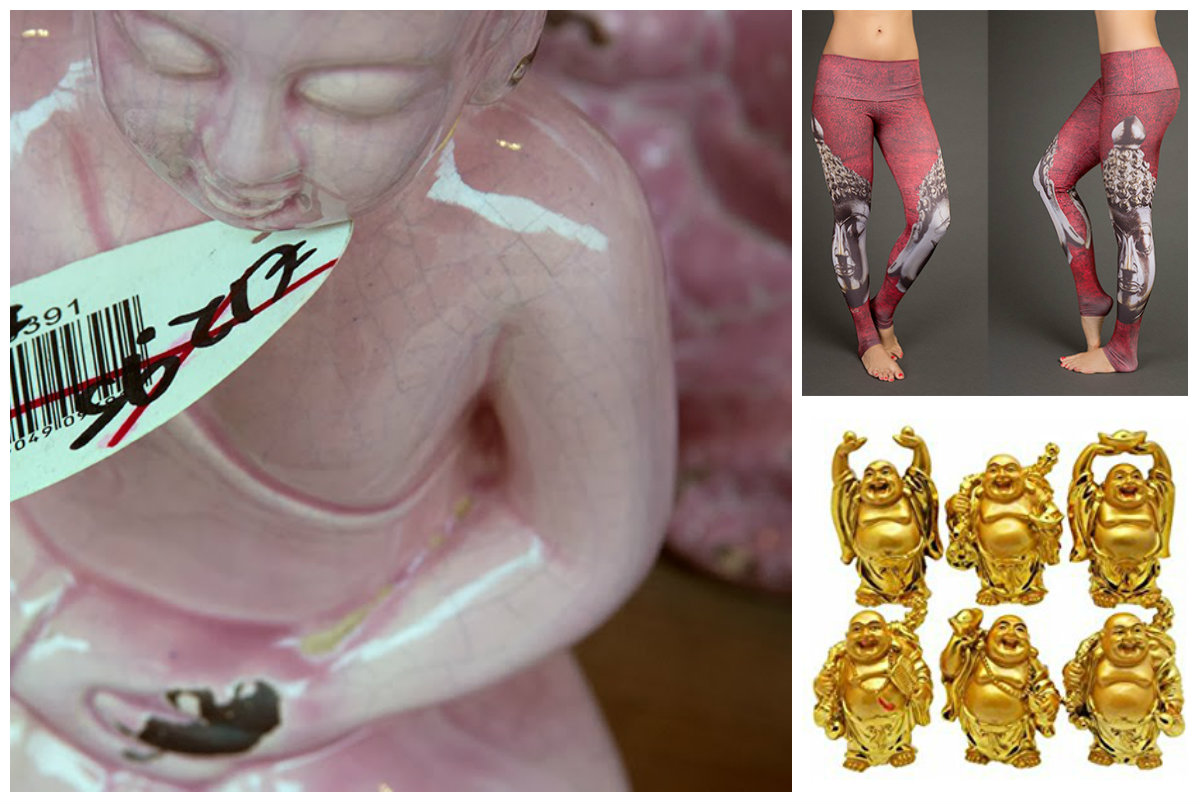
Costly Buddha

Greed comes from a belief in lack.  It’s autonomic, like its precursor anger, there is some sensitivity in our nervous system to a reflexive belief in lack.  It probably came from our ancestors, they had no way of knowing if there would be enough food so we have developed an inclination to hoard and to hang onto things.  Also like anger, greed has either a story to tell or us a question to ask us.  We’re not getting what we want; or, do we do really believe that we are enough?

The more I witness my emotions, the more I am aware that the spark of anger precedes greed.  Anger may be called by numerous names;  it’s not always a hot passionate anger. Personally, I experience it as crankiness, impatience, anxiety, irritation, annoyance, frustration, and dissatisfaction.

For example, I may experience irritation that I’m not the most financially prosperous person.  Maybe I coveted another’s success.  Maybe I compared myself to another.  This lead to feeling that I am less than. This inner attack, completely from myself to myself, causes a reflexive defensiveness.  Like an autoimmune disorder, my ego’s actually attacking another part of my mind.  Paradoxically, there’s a desire to console the bruised angry part of myself with a bright shiny bauble.  One aspect is agitated, the other desires to soothe.  One time or another this, temporarily, “worked”.  The angry part was distracted.  But, the newness wears off.  The angry part resurfaced demanding gifts: a latte, a new skirt, another degree, it became voracious.

In Chinese Buddhism the Hungry Ghost is a revenant from someone who died traumatically, or has been neglected by their ancestors.  In a nutshell, they can be dangerous because they are permanently dissatisfied.  They haven’t found peace. However, I think of it as a metaphor for Now.  In this life there is often inability to find contentment, or as the yogi say santosha.

As I shared in my previous post, anger should be observed in its natural habitat. In the same spirit, it would behoove us to observe greed.  As mentioned, greed is often unaddressed anger.  There is an abrasion, an irritation, a tapping finger, a stomping foot buried at various layers.  I am not getting what I want!  I deserve this thing!  Argh!

As my dear teacher says, “witness everything!”  Pause, notice when you feel you can’t have enough.  It is that easy.  You just have to practice.  We just choose to ignore and be possessed by the feeling with trying to satisfy it.   Ask yourself, “will this bring me peace?” “Will this bring me closer to Joy?”  Use whatever term describes yourself when there’s no problem to solve.  If the answer is “yes”, I suggest you proceed. No one outside of you can answer this.  Watch the urges.  They are insidious.  They rear their ugly head in a split second.  One minute you enjoying a meal at the dinner table then the inner spoiled child wants another piece of cake.  It’s stomping its foot.  Will it bring you love? You are already the embodiment of love.  No piece of cake and add to that.


Hold On To Your Love…

13918915_10206874399154253_678444462_o

There is only Now…

Can we Comprehend Infinity?

Keep Up The Good Work!


2nd anniversary

It’s the blog’s two-year anniversary.  Thank you for sharing the love and light!  Mommy dharma has kept me preoccupied; but, all is as it should be!

A tardy Day 11 of 30 Days of Peace (but, I forgive myself)!

One of my spiritual teachers, Rev. Richard Burdick, is a musician.  He recently shared that new piano students would focus on the mistakes they made while playing.  He explained that he would try to shift their focus to celebrating the dozens of right notes they played instead.

We’ve all been the aforementioned novice musician.  We gave a presentation and focused on the one slide we flubbed.  We made a beautiful meal and focused on the salty side dish. We were snappy with a loved one and forgot all of the hugs, kisses, and wiped tears.  Or, we got distracted from our spiritual practices and labelled ourselves a failure.

An essential component of inner peace is forgiveness.  I know it sounds cliché; but, forgiveness begins with ourselves.  In several previous posts I note the importance of maintaining regularity in practicethe benefits of small sessions, and not judging yourself harshly if (and when) you slip.  The reason these tips are repeated so often is I speak from experience.  There are so many opportunities to become distracted from the path of fire and light.

…But, each slippery rock is a stepping stone.  One deep breath and you’re back on the tightrope.  The important idea to hold is the only reality is this moment.  That is what all of the new-agey whoey phooey means by “The Now“!

Whatever you did before is over; whatever you think you may do is not guaranteed.  This moment–which appears to move linearly through this imagined construct called time– is really not moving.  This moment is Eternity–in experiences of flow, deep connection, and the blissful states of meditation we chip away at its veil.

When you have full awareness in the moment it is the zenith, the ambrosia, heaven on earth.  Isn’t attainment worth the effort?

But, even if you find you’re distracted from The Now by the illusory pull of the ephemeral world, it’s right there just waiting for you to wake up enough and let it pull you back in.

I was just there.  Were you?


Divine Gravity

Gravity

Day 10: 30 Days of Peace:

The Road to Heaven is Paved with Good Intentions (Thank You, Swami J)

Are You Your Relationships?

WorldOneness4

I eliminated duality with joyous laughter
Saw the Unity of here and the hereafter
Unity is what I sing, Unity is what I speak
Unity is what I know, Unity is what I seek

Rumi

Part 7: 30 Days of Peace

Appearance plays a particularly interesting role in the Himalayan Tradition. The Master’s of these practices elucidate, from their direct experiences, that All that exists is One Power, One Presence, One Consciousness (call out what you will, I will NOT anthropomorphize). But, it appears to present as multiplicity.  This appearance goes by many names: maya, avidya, shakti, illusion.

The cosmological apparent multiplicity is mirrored in the microcosm. People appear one-way outwardly. But, what is going inwardly may be entirely different.

We all have different expectations for our relationships. Most of them are made from our attraction (raga) to about particular outcome: we expect loyalty, companionship, perhaps even financial support.

Some of these expectations are stated when we commit to a relationship, some of them are implied. But, this can lead to assumptions.

Furthermore, there are societal expectations and norms for where what kind of relationships we need to be in based on constructs such as: age, sex, race, and socioeconomic status.

People can disappoint us (which leads into a whole different post about expectations and attachments). They may even harm our bodies (I write this with the assumption that readers of this post know they are not merely a body).

If we allow it, all of this creates stress.

It’s no wonder many wise sages sought refuge in monasticism! Even there, unless you’re a hermit, there are still vows, obligations, and relationships with other monks!

The irony, and purpose of this post, is that it’s all the Power of the aforementioned illusion, the Leela, the Play of Consciousness.

We started this post discussing Unity, not connection–that would denote that the One could be separated.

What’s really going on is utterly magical. Through its own will the One manifests as many. Therefore, relationships are a way the One expresses its magnificence.

This is important for a seeker to understand.

We are relationships. We are the result of relationships. We create and sever them. Our actions may create humans that, in turn, share this web of karma. It sounds really ominous; but, it’s actually beautiful… We are every apparent individual that exists. We are not separated.

When we remember this we can practice lovingkindness to everyone. So many master teachers have tried to impart this wisdom. Because, as stated in many previous posts, there are no others.

One practice from this tradition is a meditation on the Four Attitudes.

  • Friendliness : an attitude to cultivate with the general public
  • Compassion : an attitude to cultivate with those who are suffering
  • Gladness : an attitude to cultivate with those you are envious of
  • Neutrality : an attitude to cultivate with those you have strong negative feelings towards

During your seated practice you can bring forth the image of a person who evokes these responses in you. You breathe and hold their image in your mind-field. Allow the attitude to fill the space and send the recipient the blessing of your positive wishes. Neutrality is the most profound of these attitudes. If you can become neutral, by remembering those who cause pain are also in pain, you may eventually progress to compassion.

Click the links!!

Hugs and Kisses for Your Soul

20 sec kiss

Twenty-second hugs are so healthy.

Twenty-second hugs make you strong.

Twenty-second hugs are so healthy.

They make you flourish all day long.

Clementine Hurt (age 5)

Hugs and kisses are good for us. They trigger the parasympathetic nervous system and make us feel safe and loved. So, does meditation. Think of it as kissing and hugging yourself!

OK, if you’re not already convinced that a regular meditation practice is one of the greatest gifts you can bestow upon yourself–I’ll try to bait you with a little evidentiary support.

I am writing this semi-sarcastically because the Yogis understood the profound effects their sadhana (practices) had on their body, breath, mind, conscience continuum without doing experiments on others. They were the laboratory.

But, my Master’s degree is in Public Health; so,  I appreciate a good peer-reviewed journal.

Benefits of meditation include (each one is linked to a recent peer-reviewed article):

However, these (as I’ve posted previously) are the fringe benefits.

I love teaching meditation in hospital environment. I am supremely grateful for my job. But, our focus is on the aforementioned benefits and mindfulness. 

Mindfulness is the practice of paying attention to, and seeing clearly with nonjudgement, whatever is happening in our lives.

But, this benefit, as valuable as it may be (and as well-promoted as it is, right now) is also a fringe benefit (that does not diminish its value!).

The teachings of the Himalayan Master’s (the convergence of the three streams of Yoga, Vedanta, and Tantra) reveal, through repeatedly corroborated direct experiences, that there are many stages of unfolding during meditation. The physiological responses (although pleasant) are merely a threshold to cross. Mindfulness (although extremely beneficial) is a result of another doorway. But, the final stage is absorption (samadhi) with the Center of Consciousness… Which is True Inner Peace.

Part 6: 30 Days of Peace (1 day late)

We are Ooommm

Part 3: 30 Days of Peace

The cosmic syllable “Om” can be understood to be one and the same with the Center of Consciousness.  Although “Om” is not a mere human construct, it can be used as a way to conceptualize the indescribable.  According to the Mandukya Upanishad, it symbolizes the states of Consciousness receding into their Silent Source.  According to the Yoga Sutras, contemplation on its vibration brings stabilization in meditation.

Previously, I have discussed the Center of Consciousness being pervasive with everyone and everything.  Granted, insentient objects do not have mind to illuminate their True Nature; but, they are manifestations of the same Divine Perfection.

Purna from the Isha Upanishad

Om
Purnamadah Purnamidam
Purnat Purnamudachyate
Purnasya Purnamadaya
Purnameva Vashishyate
Om shanti, shanti, shanti

Om.
That is perfect,
This is perfect.
When perfection is taken from the perfect,
Perfect alone remains.
Om, peace, peace, peace

Therefore, EVERYTHING IN CREATION IS PERFECT.

This may be challenging to affirm for numerous reasons.  However, the chief issue is the clouding of our minds.  They are colored by perception of separation (egoism), mistaking the unreal for the unreal (or ignorance of our True Nature), fear of death, attraction, and aversion.  These colorings are removed by a regular practice of going inside–away from the ephemeral to the Eternal.

When we are firmly established in this Supreme Awareness we realize no one is broken.  They are asleep.  How can anyone want to harm another–there are no others! We are One; We are Om.